 :
:  :
:  :
:  :
: 
Our Blogs
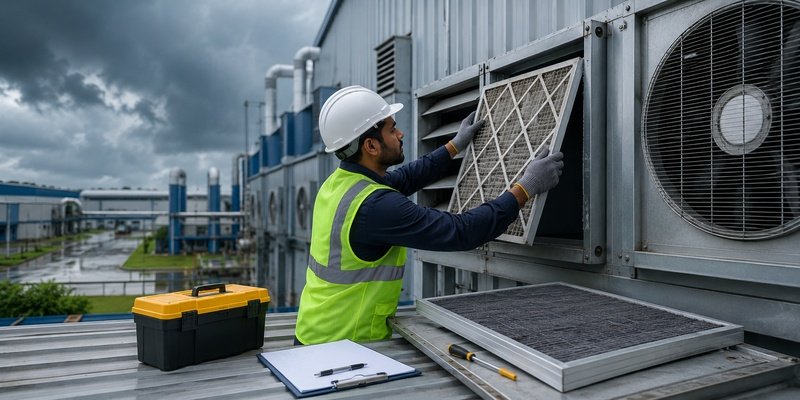
Pre-Monsoon Maintenance: A Checklist for Replacing Factory Ventilation Filters
As the monsoon approaches, factories need to prepare their ventilation systems for higher humidity, moisture, dust, and changing outdoor air conditions. One of the most important steps in this preparation is checking and replacing factory ventilation filters before they become clogged or damaged. A neglected filter can restrict airflow, increase pressure on fans and HVAC equipment, and allow unwanted particles to circulate through the facility. Industry maintenance guidance also recommends considering pressure drop, operating conditions, and visible filter damage rather than relying only on a fixed replacement schedule.
For manufacturing units, pre-monsoon maintenance is therefore more than a routine task. It is an opportunity to improve ventilation performance, support better factory air quality, and reduce avoidable maintenance issues during the rainy season.
Why Pre-Monsoon Filter Replacement Matters
Monsoon weather can bring high humidity and moisture into industrial environments. When combined with dust and continuous equipment operation, these conditions can place additional demands on ventilation systems.
A clean, correctly installed filter helps maintain the intended airflow while capturing airborne dust and other particles. On the other hand, an overloaded filter can increase resistance and reduce airflow, forcing fans and related equipment to work harder.
Pre-monsoon filter maintenance can help factories:
• Maintain consistent ventilation and airflow
• Reduce dust circulation inside production areas
• Prevent excessive strain on ventilation equipment
• Support better indoor air quality
• Identify moisture or filter damage early
• Plan replacements before peak monsoon conditions
Factory Ventilation Filters: Pre-Monsoon Replacement Checklist
Before the rainy season begins, maintenance teams should inspect every relevant ventilation and air-handling unit systematically.
1. Check the Existing Filter Condition
Start with a visual inspection. Look for heavy dust accumulation, discoloration, tears, holes, collapsed media, or signs of moisture exposure. Damaged or wet filters may need immediate replacement rather than continued use.
2. Monitor Differential Pressure
A filter can appear acceptable while still restricting airflow. Measuring differential pressure across the filter provides a more useful indication of its condition. A rising pressure drop generally indicates increasing resistance caused by accumulated contaminants.
Maintenance teams should compare readings with the filter manufacturer's recommended limits and the system's normal operating range.
3. Inspect Filter Frames and Seals
Replacing the filter media alone is not enough. Check the housing, retaining mechanisms, gaskets, and seals for gaps or damage.
Poor sealing can create an air bypass, allowing unfiltered air to move around the filter instead of through it. Correct fitting and sealing are therefore essential for effective filtration.
4. Check for Moisture and Condensation
Inspect the filter, housing, nearby coils, ducts, and fresh-air intake for signs of moisture accumulation. During humid weather, damp areas can contribute to microbial growth and other ventilation problems.
If a filter has become wet or shows visible microbial growth, it should not simply be left in service.
5. Confirm the Correct Filter Specification
Before ordering replacements, verify the required dimensions, filter type, efficiency rating, airflow requirements, and installation direction.
A filter with higher filtration efficiency is not automatically the best choice for every system because increased filtration can also increase airflow resistance. The filter should match the ventilation equipment and the facility's air-quality requirements.
6. Clean the Filter Housing
Once the old filter is removed, clean accumulated dust from the housing and surrounding area before installing the new filter. Industrial filter replacement procedures commonly recommend cleaning filter frames and nearby surfaces during replacement.
7. Install and Secure the New Filter Properly
Place the new filter correctly according to the airflow direction marked on the filter or housing. Ensure that it sits securely without folds, gaps, or loose edges.
A poorly fitted filter can allow bypass air and reduce the effectiveness of the entire ventilation system.
8. Record the Replacement
Maintain a simple filter maintenance record containing:
• Replacement date
• Filter specification
• Equipment or AHU identification
• Differential-pressure reading
• Inspection observations
• Name of the person responsible
These records make it easier to identify recurring problems and establish a condition-based replacement schedule.
Signs That Industrial Ventilation Filters Need Replacement
There is no universal replacement interval for every factory. Dust load, operating hours, production processes, outdoor pollution, filter type, and system design can all affect service life.
Look for these warning signs:
| Warning sign | What it may indicate |
|---|---|
| Reduced airflow | Filter may be clogged |
| Rising differential pressure | Increasing airflow resistance |
| Heavy dust accumulation | Filter loading is increasing |
| Torn or collapsed media | Filtration integrity is compromised |
| Moisture or microbial growth | Filter may require immediate replacement |
| Higher energy consumption | System may be working harder |
| Dust around vents or equipment | Possible filtration or sealing issue |
How Often Should Filters Be Replaced?
The right factory ventilation filter replacement frequency depends on the application rather than a single fixed timeline. A dusty manufacturing environment may require more frequent inspections than a relatively clean facility.
Instead of relying only on a calendar, combine the manufacturer's recommendations with:
1. Differential-pressure readings
2. Visual inspection
3. Airflow performance
4. Operating hours
5. Environmental and production conditions
This condition-based approach can help prevent both premature replacement and excessive filter use.
Why Choose Advance International for Ventilation Filtration Needs?
For factories preparing their ventilation systems for changing seasonal conditions, choosing suitable filtration products is an important part of preventive maintenance. Advance International can help businesses address their industrial air-filtration requirements with solutions selected according to application and system needs.
Whether the requirement involves routine replacement, industrial ventilation, or filtration support, proper product selection and installation can contribute to reliable airflow and cleaner working environments.
Conclusion
Pre-monsoon maintenance gives factories a valuable opportunity to inspect their ventilation systems before humidity and changing weather conditions create additional challenges. Replacing worn or clogged factory ventilation filters, checking differential pressure, inspecting seals, removing moisture-related risks, and maintaining replacement records can support reliable ventilation throughout the rainy season.
For businesses planning their seasonal maintenance, Advance International can be a dependable partner for industrial filtration requirements. Choose the right filter for your application, inspect it regularly, and make replacement part of a proactive factory maintenance plan.
FAQs
1. How often should factory ventilation filters be replaced before the monsoon season?
There is no universal replacement interval. Filters should be replaced according to manufacturer recommendations, operating conditions, pressure-drop readings, visible loading, and the level of dust or contaminants in the facility.
2. What signs indicate that an industrial ventilation filter needs replacement?
Reduced airflow, increased differential pressure, heavy dust buildup, damaged filter media, unusual odors, moisture, and visible microbial growth can indicate that a filter needs attention or replacement.
3. Why is pre-monsoon ventilation filter replacement important for factory air quality?
Replacing clogged or damaged filters before the monsoon can help maintain airflow and reduce the circulation of accumulated dust and contaminants while supporting more consistent ventilation performance.