 :
:  :
:  :
:  :
: 
Filter Cloth Manufacturers & Suppliers
Advance International is among the experienced filter cloth manufacturers and suppliers, offering dependable filtration fabrics for industrial applications where efficient solid-liquid or air-solid separation is required. Our filter cloth solutions are selected according to filtration requirements, equipment type, operating conditions and the nature of the material being filtered. As a reliable filter cloth supplier, we focus on consistent quality, suitable fabric construction and practical solutions for different industrial processes.
About Filter Cloth
Filter cloth is a specialised filtration medium used in industrial filtration equipment to separate solids from liquids or gases. It allows the required fluid or air to pass through while retaining suspended particles, helping industries improve filtration efficiency and manage process residues.
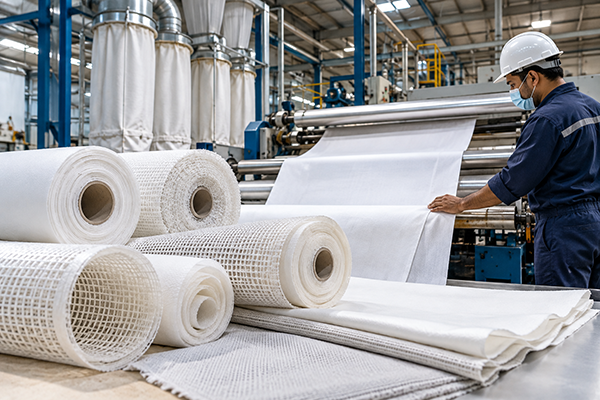
Different filtration applications require different fabric characteristics. Material selection, weave pattern, permeability, thickness, strength, temperature resistance and chemical compatibility can all influence filtration performance. Choosing an appropriate cloth can therefore help maintain stable operation and reduce unnecessary filtration problems.
Advance International provides filter cloth solutions for industrial requirements where dependable filtration and suitable fabric performance are important. Our approach focuses on understanding the application before recommending a suitable filtration fabric.
Types of Filter Cloth
The appropriate filtration fabric depends on the process, equipment and material being filtered. Common considerations include the fibre used and the construction of the cloth.
Synthetic Filter Cloth
Synthetic fabrics are widely used for industrial filtration because they can offer good mechanical strength, controlled permeability and resistance to various operating conditions. Depending on the application, fabrics may be manufactured using materials such as polyester, polypropylene, nylon or other suitable synthetic fibres.
Woven Filter Cloth
Woven filtration fabrics are produced by interlacing yarns in specific patterns. Their construction can be selected according to the required particle retention, filtration rate and mechanical strength.
Filter Press Cloth
Filter press cloth is designed for use with filter press systems, where pressure is applied to separate solids from liquids. Proper cloth selection can influence cake formation, filtrate clarity and the ease of cake discharge.
Custom Filter Cloth
Industrial equipment and filtration processes can vary considerably. Custom-sized or application-specific filter cloth can therefore be useful where standard dimensions or fabric specifications do not meet operational requirements.
Applications of Filter Cloth
Filter cloth is used across a range of industrial processes where separation and filtration are required. Applications may include:
• Filter press operations
• Industrial wastewater treatment
• Chemical processing
• Pharmaceutical manufacturing
• Food and beverage processing
• Mining and mineral processing
• Cement and construction-related processes
• Sugar and allied industries
• Pulp and paper processing
• Effluent treatment systems
• Sludge dewatering
• General industrial filtration
The exact fabric specification should be selected according to the process conditions rather than simply based on the industry name.
Key Features of Filter Cloth
The performance of a filtration fabric depends on several
technical characteristics. Depending on the application, important features
may include:
• Suitable air or liquid permeability
• Controlled particle retention
• Good mechanical strength
• Resistance to abrasion
• Appropriate chemical resistance
• Suitable temperature tolerance
• Stable dimensional characteristics
• Consistent fabric construction
• Compatibility with filtration equipment
• Availability in application-specific sizes and configurations
Selecting these characteristics according to the operating environment can help achieve more consistent filtration results.
Benefits of Using the Right Filter Cloth
Choosing an appropriate filtration fabric can provide several operational benefits.
Better Filtration Control
A suitable fabric can help maintain the required balance between particle retention and filtration flow, supporting more consistent process performance.
Improved Cake Formation
In filter press and similar applications, the right cloth can contribute to effective solids retention and formation of a manageable filter cake.
Longer Service Life
Selecting fabric according to chemical exposure, pressure, temperature and mechanical conditions can help reduce premature fabric deterioration.
Easier Maintenance
Correctly selected cloth dimensions and construction can make installation, replacement and routine maintenance more convenient.
Application-Specific Performance
Different processes have different filtration requirements. Working with experienced filter cloth manufacturers allows customers to consider fabric specifications that correspond to their actual operating conditions.
Why Choose Advance International?
Advance International understands that filtration requirements differ from one industrial process to another. Instead of treating every application in the same way, we focus on the factors that influence fabric selection and performance.
Application-Focused Solutions
We consider the filtration equipment, material characteristics and operating environment when identifying suitable filter cloth options.
Consistent Product Quality
Fabric construction and filtration characteristics need to remain consistent for dependable industrial use. Our focus is on supplying filtration fabrics suitable for the intended application.
Technical Understanding
Our team can help customers evaluate factors such as fabric type, weave, permeability, dimensions and operating conditions before selecting a filtration solution.
Flexible Requirements
Industrial customers may require different sizes, configurations and fabric specifications. We support requirements based on the application and equipment.
Reliable Supply
As an established filter cloth supplier, Advance International works to provide products according to agreed specifications and requirements, helping customers manage their filtration needs efficiently.
How to Select the Right Filter Cloth
Choosing the correct cloth involves more than selecting a fabric by name. The following factors should be evaluated:
1. Filtration equipment: Identify whether the cloth will be used in a filter press, vacuum filter, belt filter or another system.
2. Material being filtered: Consider particle size, concentration, viscosity and chemical characteristics.
3. Required filtration rate: Determine the desired balance between flow and particle retention.
4. Operating temperature: Select a material appropriate for the process temperature.
5. Chemical exposure: Check compatibility with the chemicals and solutions involved.
6. Mechanical conditions: Consider pressure, abrasion, tension and repeated use.
7. Dimensions: Ensure the cloth fits the filtration equipment accurately.
8. Cleaning requirements: Consider whether the fabric needs regular washing or cleaning during operation.
Providing these details to the supplier can make product selection more precise and reduce the possibility of using an unsuitable filtration medium.
Our Process
Advance International follows a straightforward approach to filtration fabric requirements:
Requirement Discussion → Application Assessment → Fabric Selection → Specification Confirmation → Manufacturing/Supply → Quality Check → Dispatch
We first understand the customer's filtration application and equipment requirements. The relevant fabric characteristics are then considered before specifications are finalised. Once the product requirements are confirmed, the filter cloth is prepared or supplied according to the agreed specifications.
Industries We Serve
Filtration fabrics can be required across many industries. Advance International caters to applications where industrial filtration and separation are an essential part of the process, including:
• Chemical and process industries
• Pharmaceutical industry
• Food processing
• Sugar industry
• Cement industry
• Mining and minerals
• Water and wastewater treatment
• Pulp and paper
• Manufacturing facilities
• Industrial processing plants
Since filtration conditions vary between plants, product selection should always be based on the specific application.
Frequently Asked Questions
1. What is filter cloth used for?
Filter cloth is used as a filtration medium to separate solid particles from liquids or gases. It is commonly used in industrial equipment such as filter presses, dewatering systems and other filtration machinery.
2. How do I select the right filter cloth?
Selection depends on the equipment, material being filtered, particle size, operating temperature, pressure, chemical exposure, required permeability and desired filtration performance. Sharing these details with a filter cloth supplier helps identify a suitable option.
3. What materials are commonly used for filter cloth?
Depending on the application, filtration fabrics can be produced from synthetic fibres such as polyester, polypropylene and nylon, among other materials. The appropriate material depends on the process conditions and filtration requirements.
4. Can filter cloth be customised?
Yes. Industrial filtration equipment may require specific dimensions, configurations or fabric characteristics. Customised filter cloth can be considered when standard products do not meet the equipment or process requirements.
5. Where is filter cloth commonly used?
Filter cloth is used in wastewater treatment, chemical processing, mining, food processing, pharmaceuticals, cement, sugar, pulp and paper, and other industrial filtration applications.
Get the Right Filter Cloth for Your Application
Choosing the right filtration medium can make a meaningful difference to filtration efficiency, equipment operation and maintenance requirements. Advance International works with industrial customers to understand their application and supply suitable filter cloth solutions based on technical requirements. Contact Advance International to discuss your filtration requirements and connect with an experienced filter cloth supplier for the right product specification.