 :
 :
 :
 :

Our Blogs
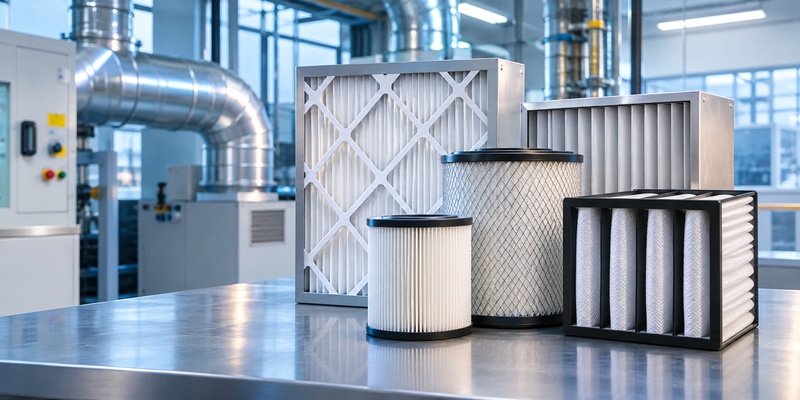
Industrial Air Filter Requirements Under Schedule M 2026: A Guide for Pharmaceutical Manufacturers
The revised Schedule M has brought greater attention to contamination control, ventilation, and environmental monitoring in pharmaceutical manufacturing. For manufacturers reviewing their facilities in 2026, selecting the right Industrial Air Filter is an important part of maintaining appropriate manufacturing conditions. Air filtration helps control airborne particles and supports product quality, particularly in sterile manufacturing and cleanroom environments.
However, the filtration system must be selected according to the product, manufacturing process, and contamination risks rather than through a one-size-fits-all approach. Advance International can be considered when evaluating industrial filtration solutions for pharmaceutical facilities. Understanding the applicable Schedule M provisions, filter integrity testing, and maintenance requirements can help manufacturers make informed decisions and prepare their facilities for regulatory inspections.
1. Understanding Revised Schedule M Requirements in 2026
Schedule M, under India's Drugs Rules, 1945, outlines Good Manufacturing Practices (GMP) and requirements for pharmaceutical premises, plant, and equipment. Its revised version, notified in December 2023, strengthens expectations around pharmaceutical quality systems and facility controls.
For air filtration, manufacturers should assess:
• Adequacy of ventilation and air filtration.
• Control of temperature, humidity, and pressure where required.
• Prevention of contamination and cross-contamination.
• Monitoring and maintenance of air-handling systems.
• Documentation of testing, servicing, and corrective actions.
These controls should be appropriate to the manufacturing process and documented within the facility's quality management system.
2. Why an Industrial Air Filter Matters in Pharmaceutical Manufacturing
An Industrial Air Filter helps remove airborne particles from incoming or recirculated air, depending on the system design. In pharmaceutical facilities, effective filtration supports controlled environments and helps protect products, equipment, and critical manufacturing operations.
The appropriate filtration arrangement depends on the activity being performed. Sterile product filling, non-sterile tablet manufacturing, raw material handling, and packaging do not necessarily require identical filtration systems.
Manufacturers should evaluate:
• Particle removal efficiency.
• Airflow requirements and pressure drop.
• Compatibility with the air-handling unit (AHU).
• Resistance to operating temperature and humidity.
• Maintenance accessibility and replacement requirements.
A properly selected filter must work as part of the complete HVAC system rather than as an isolated component.
3. When Are HEPA Filters Required?
High-Efficiency Particulate Air (HEPA) filters are important for applications requiring stringent airborne particle control, particularly in sterile manufacturing and critical cleanroom zones.
However, manufacturers should not assume that every pharmaceutical production room automatically requires HEPA filtration. The applicable Schedule M provisions, manufacturing process, cleanroom classification, and contamination-control strategy determine the required arrangements.
A facility should evaluate whether its filtration system can consistently achieve the required environmental conditions. This assessment should consider filter efficiency, installation integrity, airflow patterns, room pressure differentials, and the risk of contamination during production.
4. How to Select the Right Industrial Air Filter
Choosing an Industrial Air Filter requires technical assessment rather than relying on filter efficiency alone. Manufacturers should consider the following factors before purchasing or upgrading filtration equipment.
Application and risk: Identify the manufacturing activity and the level of environmental control required.
Filter efficiency: Select a suitable filter grade based on the required particle-control performance and system design.
Airflow capacity: Ensure the filter can handle the required airflow without creating unacceptable resistance.
Installation compatibility: Check the filter dimensions, housing, sealing arrangement, and AHU specifications.
Documentation: Obtain relevant technical specifications, test certificates, and maintenance instructions.
Advance International can be approached to discuss industrial filtration requirements and suitable product options. Final selection should be confirmed against the facility's engineering specifications and applicable GMP requirements.
5. HEPA Filter Leak Testing and Maintenance
Even a high-efficiency filter can fail to protect a cleanroom if the filter media, frame, or seals develop leaks. Installed filter integrity testing helps identify these problems before they compromise environmental control.
The revised Schedule M's cleanroom provisions specify installed HEPA filter leakage testing in accordance with applicable ISO standards, with a recommended interval of six months and a maximum interval of twelve months under the relevant provision. Facilities should also consider stricter applicable requirements, approved procedures, and risk assessments.
A sound maintenance programme should include:
• Periodic integrity testing by competent personnel.
• Monitoring of pressure differentials across filter banks.
• Inspection for damage, leakage, and improper sealing.
• Replacement according to condition and validated procedures.
• Documented test reports, servicing records, and corrective actions.
Testing should also be considered after relevant maintenance or changes that could affect filter integrity.
6. Prepare Your Facility for Schedule M Compliance
Manufacturers should review their existing HVAC systems through a documented gap assessment. This helps identify whether filtration, monitoring, maintenance, or supporting records require improvement.
A practical checklist includes:
1. Review applicable Schedule M clauses and facility requirements.
2. Assess filtration performance and cleanroom classification.
3. Verify airflow, pressure differentials, and environmental monitoring.
4. Establish testing and preventive maintenance schedules.
5. Maintain traceable records and investigate deviations promptly.
Advance International can support discussions around industrial filtration requirements as pharmaceutical manufacturers evaluate their equipment needs.
Conclusion
Meeting revised Schedule M expectations requires a coordinated approach to ventilation, filtration, environmental monitoring, and maintenance. Selecting the right Industrial Air Filter depends on the manufacturing process, contamination risks, and required cleanroom conditions. Regular integrity testing and accurate documentation are equally important for maintaining reliable performance. Pharmaceutical manufacturers should review their systems against the applicable regulatory provisions before making changes. Contact Advance International to discuss industrial filtration options suited to your facility's technical requirements.
Frequently Asked Questions
1. Does revised Schedule M require HEPA filters in all pharmaceutical manufacturing areas?
No. HEPA filtration requirements depend on the applicable provisions, manufacturing activity, and environmental control needs. Sterile manufacturing and critical cleanroom operations generally require stringent filtration controls, while other areas must be assessed according to their contamination risks and process requirements.
2. How can pharmaceutical manufacturers select the right HEPA filter for their cleanroom?
Manufacturers should consider the required filtration efficiency, airflow, pressure drop, filter dimensions, housing compatibility, and cleanroom classification. They should also review technical documentation and verify that the installed filtration system can achieve the required environmental conditions consistently.
3. How often should HEPA filters be leak-tested under revised Schedule M requirements?
The relevant Schedule M provision recommends installed HEPA filter leakage testing every six months, with an interval not exceeding twelve months. Facilities should follow applicable requirements and approved procedures, including any stricter testing frequency established through risk assessment or other relevant standards.