 :
:  :
:  :
:  :
: 
Our Blogs
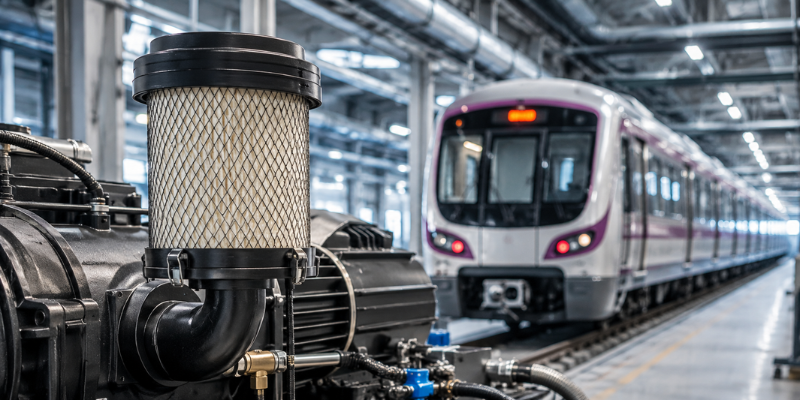
How Compressor Intake Filters Protect Pneumatic Systems in Metro Trains
Among the most efficient modes of public transport, metro trains safely and reliably transport thousands of people daily. The mechanisms and pneumatics that make these systems function seamlessly play a crucial role in ensuring safety, comfort, and performance. The compressor intake filter is one of the key elements that aid these systems.
Intake filters for compressors are critical components for the protection and efficiency of many pneumatic systems in metro trains and are generally overlooked. These filters can keep dust and contaminants out of the compressor, help reduce maintenance needs, and ensure reliable train operations.
Pneumatic systems for metro trains
Compressed air systems are critical to the operation of many functions in modern metro trains. Compressed air is produced by the air compressors and circulated through the train for use in a multitude of pneumatically operated systems.
These systems are used in the following list of areas:
• Pneumatic brakes
• Door operation systems
• Suspension systems
• Train horns
Cleanliness and freedom from contamination of the compressed air are of paramount importance, given that these parts are vital for protecting passengers and maintaining operational efficiency.
How Does a Compressor Intake Filter Work?
A compressor intake filter is fitted into the air intake part of an air compressor. Its main function is to remove the impurities from the air that would otherwise enter the compressor system.
The air around metro trains and stations, as well as the outdoor tracks, may be filled with dust, dirt, fine particles and other contaminants. If unfiltered, these particles can contaminate the compressor and damage sensitive pneumatic components.
The first line of defence is the compressor intake filters, which remove contaminants before they enter the compressor.
Compressor Avoids Dust
Among the primary roles of a compressor intake filter is to keep dust and debris out of the compressor system.
Airborne particles are prevalent in the environment where metro trains operate. Dust buildup inside the compressor can reduce efficiency, wear out its internal parts, and cause expensive maintenance problems.
Intake filters remove dust and dirt from the air entering the compressor, keeping the air clean and allowing the compressor to work to the best of its abilities. This means that the compressor will always be able to provide the compressed air needed to power trains.
The safety of Valves and Cylinders
Numerous valves, cylinders and control mechanisms are used in pneumatic systems, all of which require clean compressed air to operate smoothly.
Abrasive particles in the air can become trapped in these components and cause wear, blockage, and reduced performance. Pneumatic control sensitivity is affected by even small dust particles, which can compromise the control's precision and reliability.
Intake filters on the compressor prevent any dirt from entering the system and protect the valves and cylinders. This decreases component failures and ensures long-term operational reliability.
Improving Compressor Life
Air compressors are a large capital expenditure in metro rail infrastructure. Regular exposure to contaminants can impose mechanical stress and accelerate component deterioration.
This risk can be minimised by using a high-quality compressor intake filter that keeps harmful particles out of the compressor. Fewer sources of dirt lead to decreased wear and tear on equipment, lower maintenance needs, and longer equipment life.
Consequently, metro operators enjoy increased compressor life, reduced maintenance expenses and greater system reliability.
Help keep Metro operations safe and reliable.
The pneumatic system is essential to the proper functioning of pneumatic brakes, automatic doors, suspension systems and warning horns. These critical functions may be compromised at any time by any disruption in air quality and could have a detrimental effect on train operations.
The clean compressed air provided by compressor intake filters plays an important role in ensuring safe and efficient metro transportation. They play an important role in the latest rail applications by protecting compressors, valves, and cylinders.
Conclusion
The intake filters at the compressor may be small components, but they can have a significant effect on the performance of a metro train. These filters help maintain the reliable operation of critical pneumatic systems like brakes, doors, suspension systems, and horns, and prevent dust from entering the compressor, protecting the valves and cylinders and extending the life of the compressor.
We know how critical high-performance filters are for challenging industrial and transportation tasks at Advance International. Our high-quality filtration products are engineered to help keep equipment reliable, extend operational efficiencies, and help ensure the long-term performance of pressure-sensitive equipment.
Advance International has been serving in Indian and foreign industrial and metro railways since last 45 yrs.